WOOLF ARTS ARCHIVE

Woolf in Circles: Coline Atterbury in Conversation with Mine Özyurt Kılıç
Coline Atterbury & Mine Özyurt Kılıç
16 September, 2026

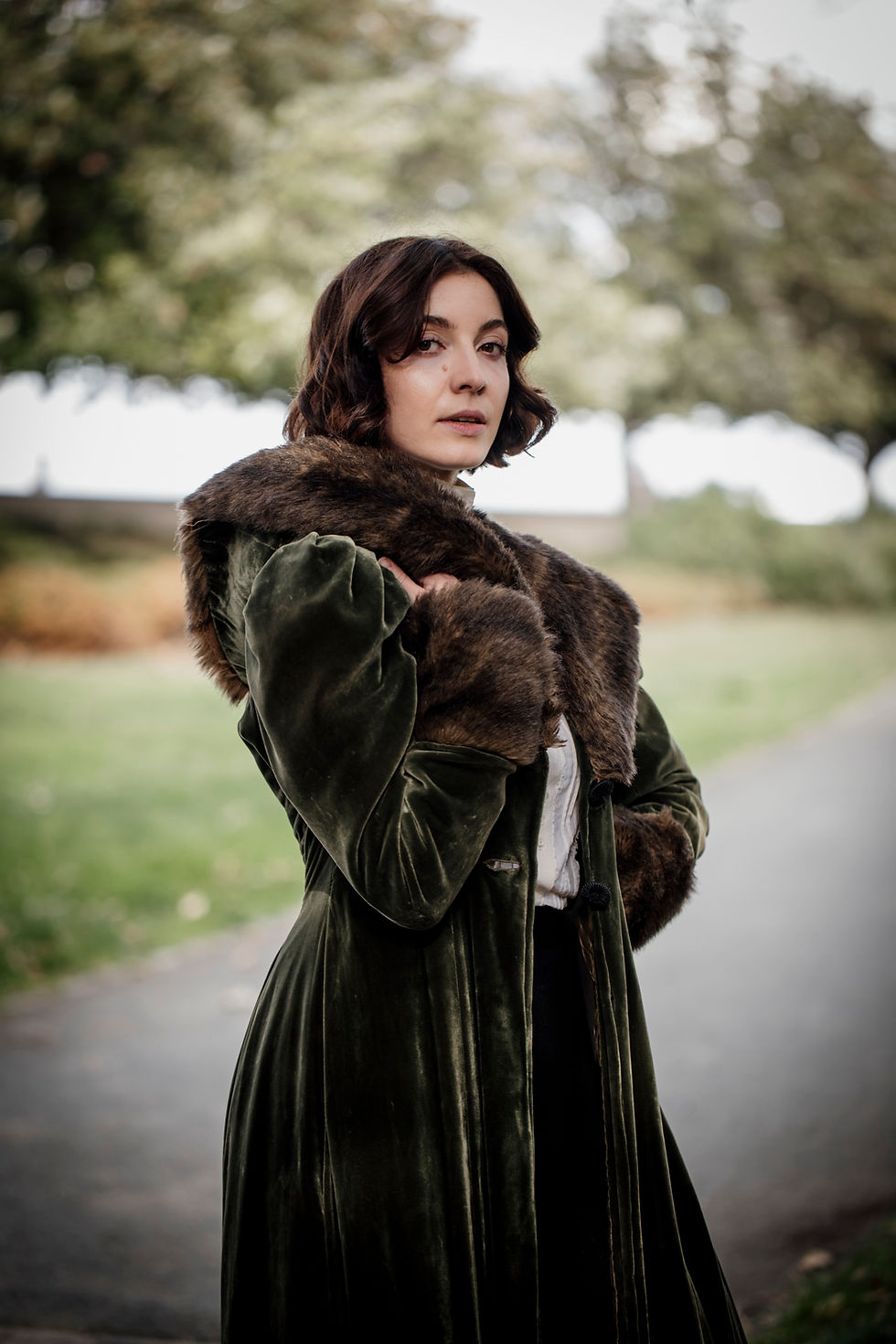
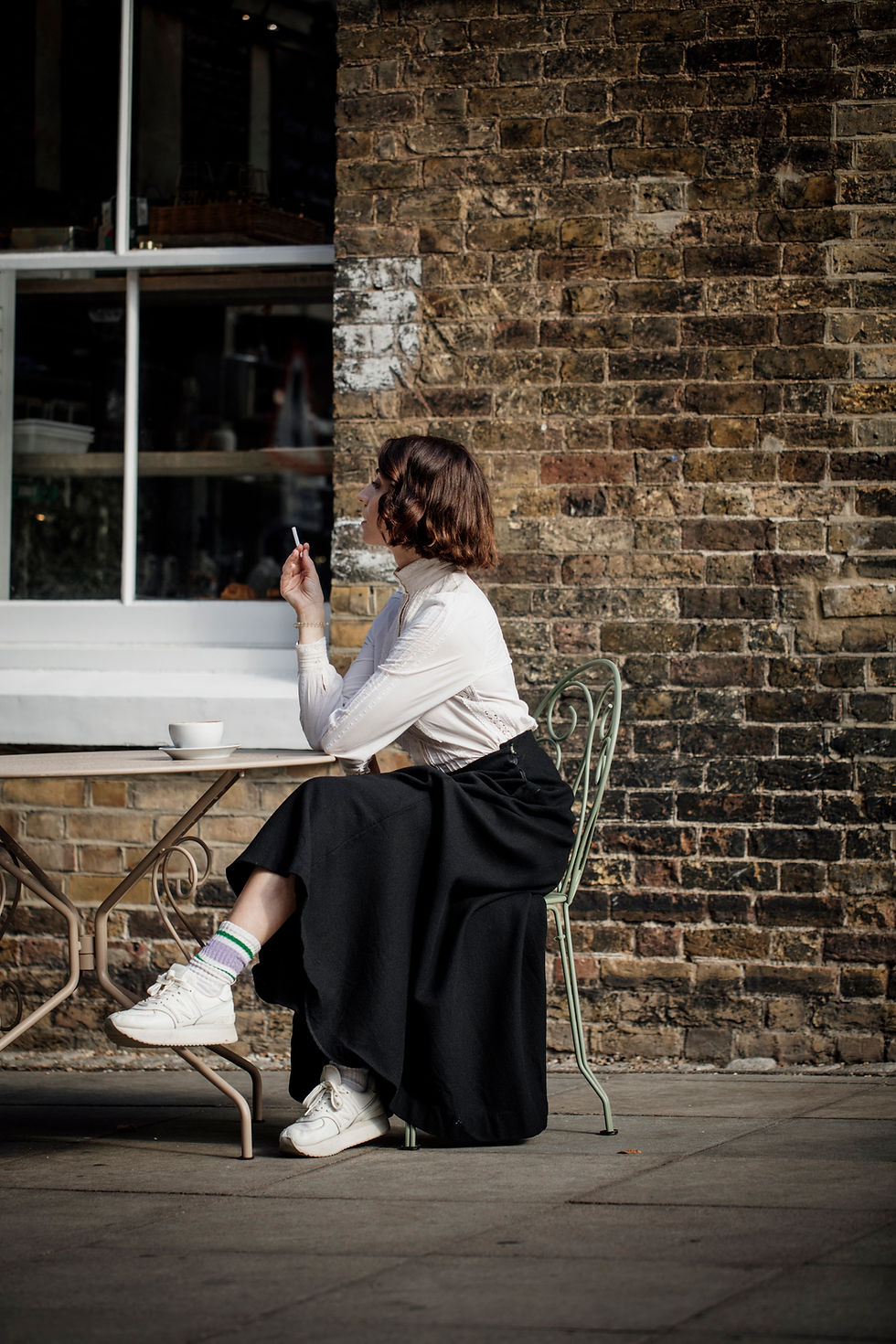
"Where the mind blazes, the soul flickers." Atterbury, Coline. I'm Afraid of Virginia Woolf, too.
I’m Afraid of Virginia Woolf, Too is a fast-paced drama written by Coline Atterbury, that follows Victoria, a writer caught in the grip of a manic creative surge. As her obsession deepens, fiction and reality blur. The play explores bipolar, creativity and the blurred line between brilliance and breakdown, drawing inspiration from the life and works of Virginia Woolf. Directed by Grace Duggan who was staff director at the National Theatre, and Resident Assistant Director at The Donmar Warehouse. The Research and Development period of the script was supported by Arts Council England, and presented in partnership with Bipolar UK. The work was shaped by experts by experience who live with bipolar.

Mine Özyurt Kılıç: What first compelled you to write I’m Afraid of Virginia Woolf, Too, and why did this story feel urgent to tell now?
Coline Atterbury: Being an actor and working in a very competitive industry with very limited opportunities, I’ve always wanted to write and create my own work.
I live with bipolar disorder and in 2024 I experienced a manic episode and fell into a depressive episode afterwards. Even after I came out of that, I still felt creatively paralysed. I started a creative exercise where you just write down your thoughts without a filter, in a stream of consciousness. At the time I was having intrusive thoughts and an idea came to me about the famous woman who drowned herself: Virginia Woolf.
I remembered that she also wrote in a stream of consciousness, just like the exercise I was doing every day. I jokingly thought, “I’m the reincarnation of VirginiaWoolf,” and then started playing with that idea. What if a modern day woman woke up one day and genuinely thought she was Virginia Woolf?
The urgency of the story comes from the reality of bipolar disorder. In the UK, around 1.3 million people live with it, yet it takes an average of almost 10 years after a first episode to receive a diagnosis. That delay can have devastating consequences, including hospitalisation, homelessness, substance abuse and suicide. What struck me is that today, Virginia Woolf is widely believed to have lived with bipolar. I wanted to tell a story that could contribute to the conversation around bipolar, particularly the less understood experiences of mania and psychosis.
Mine Özyurt Kılıç: Which of Woolf’s novels, essays, diaries or letters entered most deeply into the making of the play? How did they shape Victoria’s voice and her identification with Woolf?
Coline Atterbury: The Waves, To the Lighthouse and Orlando were particularly inspiring. I was drawn to the way Woolf takes you inside a character’s mind and shows how they experience the world.
A Room of One’s Own also really stayed with me, especially her ideas around women having the space and freedom to create. I also read some of her diary entries, her letters to Vita Sackville-West and bits of Hermione Lee’s biography.
What struck me most was how deeply Woolf seemed to feel the world around her. That really resonated with me and became important to Victoria’s journey and her need to create something that matters.
Mine Özyurt Kılıç: The title recalls Edward Albee’s Who’s Afraid of Virginia Woolf? and perhaps Alan Bennett’s Me! I’m Afraid of Virginia Woolf. Did you have either of these earlier plays in mind? What does the word “Too” bring to your title?
Coline Atterbury: I had Edward Albee’s title in mind. I had come through a very dark period of depression and there were moments when I was genuinely afraid of myself and of what I was experiencing.
As we follow Victoria, her initial fascination with Woolf slowly becomes an obsession, which ultimately turns into something darker. There’s something frightening about identifying with someone who had ultimately taken her own life. And the “Too” came from the idea that Victoria isn’t the only person who becomes afraid of Woolf, or of what she represents. The people closest to her, watching her unravel, become afraid too.
I have to admit I haven’t read Alan Bennett’s play yet, although I love that he also took inspiration from Albee’s original title.
Mine Özyurt Kılıç: Woolf has appeared on stage as a writer, a feminist icon and a figure associated with creativity and mental illness. Where do you see your play within this theatrical afterlife? What did you want Victoria’s idea of Woolf to reveal or challenge?
Coline Atterbury: There’s a romanticised idea of the creative person being chaotic, wild and living on the edge, which becomes even more complicated when you bring mental illness into it. Particularly the way society has historically perceived “madness” in women. The idea of “female instability”. I wanted to question that, and especially the idea that creativity depends on extremes.
For me, living with bipolar has meant asking: what is me and what is the illness? Can I still create when I’m stable? Will medication change my creativity or my ability to feel things intensely?
Victoria starts to believe that greatness comes from those extremes, but ultimately sees the damage that belief causes, both to herself and to the people around her. I wanted to explore the possibility that creativity can also exist in calmness and stability and that Virginia must have also suffered greatly.
I also wanted to challenge the way we put Woolf on a pedestal. As I researched her, I became more aware of her discriminatory views. That was difficult for Victoria to confront, and raises the question of whether we can separate the art from the artist.
Mine Özyurt Kılıç: The play describes Woolf as both “mirror and myth” for Victoria. How did you distinguish between Woolf as a complex historical person and the cultural figure onto whom later generations project their own ideas about genius, gender and mental illness?
Coline Atterbury: For Victoria, Woolf starts as almost a fantasy version of herself: a person she can project everything she wants to be onto. But the more she learns, the more complicated that image becomes. Woolf was a brilliant writer, but she was also a flawed human being.
That mirroring also happens through the other characters. Christina, a more established and successful writer, and Victoria’s ex-boyfriend Leon, an academic, start to echo Woolf’s relationships with Vita Sackville-West and Leonard Woolf. It creates a kind of modern love triangle in which Victoria projects her ideas about Woolf’s relationships onto her own.
During Victoria’s decline into mania, she begins to experience birdsong as an auditory hallucination, echoing Woolf’s own experiences. In Woolf’s, Mrs Dalloway, Septimus hears birds singing to him in Greek, telling him there is no death. Victoria’s obsession with immortality and invincibility reflects the grandiose thinking that can come with mania.
Mine Özyurt Kılıç: What was it like to take on the lead role of Victoria in a play you had written yourself?
Coline Atterbury: This was the first play I’ve written, and ultimately the first part I’ve written for myself. During the R&D, I had to keep switching hats between writer and actor, which was made much easier by our wonderful director and dramaturg. I really loved the moments when I could just be the actor: exploring the text, discovering the story anew and working opposite such talented actors. Acting comes more naturally to me, so there was something really fun about letting go of the “writer-mind” and simply going on Victoria’s journey.
Mine Özyurt Kılıç: Could you tell us about the recent research and development process undertaken with Bipolar UK? How did patient and public involvement, together with responses to the work-in-progress performance, reshape the play?
Coline Atterbury: This was one of the most important parts of the process for me. Bipolar UK helped us find PPI contributors who read an early draft and gave really generous and honest feedback from the perspective of people who have lived with the illness.
Even though I bring my own lived experience of bipolar, it was incredibly valuable to hear from other people. The feedback showed us what needed clarifying and what felt authentic, and we were then able to take that into the rehearsal room with the actors and director. We also worked with an intimacy coordinator and movement director, and sound designer. They helped us explore the potential physicality of the staging and develop the soundscape of the world of the play.
We had a representative from one of Bipolar UK’s peer support groups attend the public rehearsed reading and held a joint Q&A afterwards, which felt very special.
Mine Özyurt Kılıç: One of my central aims in founding the Woolf Arts Archive was to document how Woolf continues to inspire new artistic forms and acquire new meanings through each cultural encounter. As I’m Afraid of Virginia Woolf, Too continues to evolve through performance and its encounters with audiences, what do you hope will happen next, and how would you like the play to take its place within this living archive of Woolf’s artistic afterlives?
Coline Atterbury: I see this as one small step in a much longer journey, but we’re very proud of how far the script development has come. I hope we can continue the conversation around bipolar, particularly mania and psychosis, which I still think are poorly understood and underrepresented on stage and screen.
The dream would be to fully stage the play and eventually have it published. After receiving such lovely audience feedback, I’ve also started considering adapting the story into a TV series, although that will be a much longer task.
I love the idea of the Woolf Arts Archive as a record of all the different ways people continue to find their own meaning in Woolf. One piece that particularly caught my attention is Katie Mitchell’s Waves (2011), which translates The Waves into theatre in such a visual and physical way. I was also really struck by the photograph The Garden of Forgetting II (2016) by Can Akgümüş. There’s something about the recurring presence of water in Woolf’s work that I find so beautiful and powerful. It’s sad and profound that water was also where she ultimately chose to end her life.
I think that’s what is so exciting about Woolf’s work: it keeps changing depending on who is engaging with it. I’d love I’m Afraid of Virginia Woolf, Too to become part of that ongoing conversation.

*Coline Atterbury is a British-Austrian actor and emerging writer based in London. She speaks fluent English and German and trained at the Oxford School of Drama. Her screen credits include Killing Eve (BBC), The Gathering (Channel 4), the Austrian series CopStories, as well as a range of feature and short films, most recently Cortex Alpha, which she also produced and which is currently making the festival circuit. On stage, she has played leading roles at venues including Park Theatre, Leicester Square Theatre, Barons Court Theatre, the North Wall, Peckham Theatre, King’s Head Theatre and Riverside Studios. Her debut play as a writer, funded by the Arts Council, I’m Afraid of Virginia Woolf, Too, explores the lived experience of a creative living with bipolar.